Medical Cannabis in PTSD: A GP's Frontline Perspective on Trauma, Neuroplasticity, and Patient-Centred Care
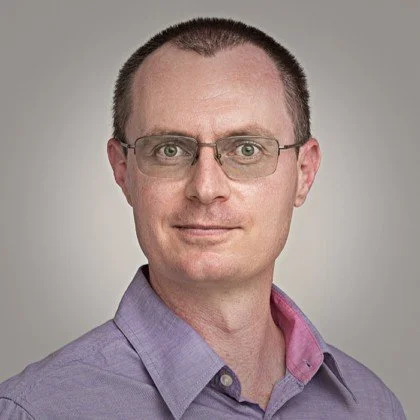
Interview with Dr. Lachlan Fieldhouse
Read time: 5-6 mins
The Insiders Extract welcomes back Dr Lachlan Fieldhouse to discuss how cannabinoid therapy could help bridge the gap between crisis management and sustained recovery for PTSD patients.
Key Takeaways
Cannabis therapy can reduce amygdala hyperactivity in PTSD patients, allowing prefrontal cortex engagement and better cognitive functioning.
Treatment must be highly individualised: PTSD manifests differently based on trauma type, personality vulnerabilities, and social support network.s
Cannabis can serve as a "neuroplastic crutch" during recovery, with many patients reducing or discontinuing use as brain structure adapts.
Poor prescribing without proper clinical oversight creates significant risks, including dysphoria, psychotic episodes, and re-traumatisation.
The Scope of the Problem
According to the Australian Institute of Health and Welfare, approximately 2.2 million Australians, around 11% of our population, will experience PTSD in their lifetime. Without the right constellation of care and support, it can persist for years. Over time, maladaptive habits and thought constructs become increasingly ingrained.
Dr Lachlan Fieldhouse, a Gold Coast-based GP specialising in ADHD, PTSD, and cannabinoid medicine, sees this reality daily in his practice. Working primarily with veterans, emergency services personnel, and civilians with complex trauma histories, he's developed a nuanced understanding of how medical cannabis can support a multimodal approach to trauma recovery.
"The really important thing for any individual with PTSD is to understand their needs, how they're getting met, what isn't getting met, and how they're making progress," Fieldhouse explains. "If we look at function and wellbeing more than labels, we're on the right track."
Understanding PTSD Heterogeneity: Why One Size Never Fits All
One of the most significant challenges in treating PTSD is the diagnostic oversimplification that occurs in clinical practice. Fieldhouse is candid about the limitations of current guidelines and trending opinions in this arena.
"In Western society, we lump people into boxes: Autism, ADHD, PTSD, anxiety disorder, personality disorder, psychosis. The problem with that is it doesn't help us understand the differences within these boxes."
"Unfortunately, our guidelines around therapy are still too broad. We say this is the evidence for depression, this is the evidence in autism, but that doesn't help the individual because they're still questioning, within all that academic stuff, what works for me?"
The heterogeneity of PTSD begins with two fundamental variables: individual vulnerability and trauma exposure patterns.
"You send a platoon to war, one of them will come back sick, and you can't pick who it is," Fieldhouse observes. "It matters not so much what happens to you; what matters is how your history shapes your response to it."
The second critical distinction is between single-incident trauma and complex, repetitive trauma.
"When people have experienced repetitive trauma, childhood neglect and abuse, for example, their response is very different compared to those who experience one-off instances like a bank being held up or an isolated incident of extreme duress."
Basic of Trauma Neurobiology: Amygdala Hyperactivity and Prefrontal Cortex Suppression
Fieldhouse's approach to cannabis therapy in PTSD is grounded in understanding the neurobiological mechanisms at play. One of the pivotal relationships in the context of trauma is between the amygdala (the brain's threat-detection centre) and the prefrontal cortex (implicated in executive function, reasoning, and emotional regulation).
"People with PTSD, their amygdala is just overactive. There's an inverse relationship of glucose utilisation and blood flow to the prefrontal cortex and the amygdala. We know that intuitively: if we're crossing the road and we get frightened by a bus that's about to hit us, we're not going to make the dinner menu for tomorrow night at the same time. Our brain won't allow us to."
For PTSD patients, this persistent state of heightened threat perception is often debilitating. Functional neuroimaging consistently demonstrates hyperactivity in the amygdala and reduced activation of the medial prefrontal cortex, regions required for extinguishing traumatic memories and down-regulating fear responses. Recent human imaging work has also linked greater numbers of cannabinoid type-1 receptors (CB1R) in the amygdala with reduced reactivity to threat stimuli, underscoring the role of the endocannabinoid system in emotional regulation and arousal processing.
“People who are really stuck with hypervigilance are essentially overthinking. So what we do is we calm down the amygdala, which allows the prefrontal cortex to open up.”
Cannabis-based medicines, particularly CBD-rich formulations with modest THC, appear to modulate these dysregulated neural circuits. Across preclinical, translational and human studies, it has been demonstrated that cannabinoids can influence fear-extinction learning, stress signalling and functional connectivity between the amygdala and medial prefrontal cortex via CB1 receptor activity, mechanisms directly relevant to trauma-related dysregulation.
By no means is Fieldhouse suggesting cannabinoids as a universal solution; however, he does emphasise the neuromodulatory properties of phytocannabinoids, which are increasingly being recognised as a promising therapeutic target in trauma-related disorders.
Clinical Application: Cannabinoid Selection and Dosing Strategies
The prescription of medical cannabis in the context of PTSD should include careful consideration of cannabinoid ratios, terpene profiles, and individual patient responses.
"Often it's a hybrid, a balanced hybrid or a gentle sativa-dominant. For the majority of folks the key is not too much THC. You don't need too much for beneficial outcomes," Fieldhouse advises.
The sativa-indica distinction, while botanically outdated, remains helpful in describing desired effects to patients. Fieldhouse notes that his patients, who are "veterans and first responders, are not often people that have had support or large exposure to the benefits of creative thought" The creative, open-minded qualities associated with sativa-leaning chemovars can be therapeutically valuable for those stuck in maladaptive patterns of thought.
"It's the sativa-type products that often promote creative, open-mindedness. But at the same time, we need nervous system modulation through the indica-associated cannabinoids and terpenes. It's a fine balancing act."
However, excessive sativa characteristics or high THC content pose noteworthy concerns.
"In chemovars that express strong sativa-leaning characteristics, high levels of alpha-pinene or limonene can be too energetic. In susceptible patients, this may increase anxiety, trigger paranoia, and precipitate dysphoric mood states, especially when paired with high THC."
For PTSD patients already experiencing hypervigilance, a dysphoric or paranoid continuity of care is essential to monitor the response to cannabis.
The Neuroplasticity Model: Cannabis as a Temporary Scaffold
One of the most compelling aspects of Fieldhouse's approach is his conceptualisation of cannabis as a temporary therapeutic aid that facilitates neuroplastic change rather than a permanent pharmacological solution.
You're talking about people who have been traumatised, might not trust others, might not have good social networks. So again, cannabis therapy as a suite of tools, along with social and vocational rehab and excellent psychodynamic treatment, can help people get through things.
"An analogy I use to help people understand: it's a bit like a record. If the record gets stuck, the needle gets stuck in the groove and just keeps playing and playing, the song doesn't follow through. Cannabis and other therapies allow the brain to rewire itself through neuroplasticity, and then the track can continue."
This framework has important implications for treatment duration and expectations. When asked about patients reducing or discontinuing cannabis use over time, Fieldhouse draws a parallel to paediatric ADHD treatment.
"I approach young kids on stimulants with a similar neuroplastic rationale, you don't need to put them on 25mg for the rest of their life. If you can change the structure of your brain, no matter how you change it, you don't necessarily need chemicals to enhance it forever."
The "crutch" metaphor recurs throughout the conversation:
"You bust your ankle, you're in a crutch and a moon boot for six weeks while your body repairs itself. Here we can draw a loose comparison with a psychological injury: your trust has been damaged, or you no longer feel safe, you've been ‘scarred’ in your mind.
In this context, cannabis can act in a supportive role while you heal. It doesn’t do the psychological work for you, but it can reduce the distress and make the healing process a little easier.”
Dr Fieldhouse emphasises that people with a history of trauma might not trust others or have good social networks. This is where cannabis therapy should be integrated amongst a suite of tools: social and vocational rehab, psychodynamic therapy, which can help people get through things.
The Critical Importance of Clinical Oversight
Fieldhouse is unequivocal about the dangers of prescribing cannabis without adequate clinical support and patient education. The ongoing conversation in Australia around "script mills" clinics that provide cannabis prescriptions with minimal consultation or follow-up is a major concern for the Australian cannabis patients and providers.
The risks of poor prescribing practices for folks with PTSD are particularly problematic. High-THC products or inappropriate product selection can trigger severe anxiety, paranoid states and, in susceptible individuals, psychotic episodes. Exacerbation of symptoms like these will not only fail to help but could actively harm patients.
"If you just get the dose wrong or the set and setting wrong, or just a wrong combination, it can really negatively impact people" Fieldhouse warns.
Moreover, PTSD patients without adequate support may engage in problematic use patterns.
"The risk for these people is they often have pervasive symptoms. If they're not under good support, they'll use cannabis too much. If they're using it too often, you get intolerance and tolerance, which leads to increasing use, but then the side effects increase."
Comprehensive care requires ongoing assessment, dose titration, and integration with psychological therapies and social support.
The Bigger Picture: System-Level Challenges
Underlying many of the challenges in cannabis prescribing is a fundamental misalignment of incentives in the healthcare system. As Fieldhouse notes bluntly: "Physicians like me get paid on volume, not quality."
This fee-for-service model discourages the time-intensive consultations necessary for thorough PTSD assessment and medical cannabis management. Certainly, skills of pattern recognition are developed through high-volume and focused practice, but structural barriers remain.
"When you see patterns regularly and intensely, you start to build up a very good pattern recogniser system. The problem is that most people aren't building up a knowledge set because of the work they do, they're just trying to muddle through."
Conclusion: Toward Individualised, Function-Focused Care
Clinical experience from practitioners such as Dr Fieldhouse offers valuable insights into evidence-based, patient-centred care.
The goal is always to optimise functioning while minimising dependence and side effects, with regular clinical review to assess whether adjustments or discontinuation are appropriate.
As Fieldhouse concludes:
"It's not only about the right medication, at the right time, for the right person, at the right dose. It's also about helping them change their understanding and their navigation through life."
For healthcare professionals considering cannabis therapy for PTSD patients, the message is clear: this is sophisticated medicine requiring sophisticated practice. Done well, it can provide meaningful relief and facilitate lasting recovery. Done poorly, it risks causing further harm.
Dr. Lachlan Fieldhouse is a dedicated General Practitioner at Medical on Miami in Queensland, Australia, bringing nearly two decades of diverse medical experience to his practice. With a comprehensive background that includes leading health services in prisons, offshore detention centres, high schools, and aged care facilities across five territories in different countries, Dr. Fieldhouse has developed particular expertise in mental health, complex co-morbidity, ADHD, chronic pain, ASD, childhood development, and Gender Affirmation healthcare. As a Fellow of both the Royal Australian and New Zealand Colleges of General Practitioners, he combines his clinical work with educational leadership, serving as a GP Registrar and Medical Student supervisor while maintaining a passionate commitment to improving community health outcomes through personalised healthcare delivery and clinical leadership in primary care.
Disclaimer: This information is shared with a global readership for educational purposes only and does not constitute medical or business advice. All patient-related information has been de-identified OR fictional to protect privacy. Nothing in this article is intended to promote the use or supply of medical cannabis to members of the public.