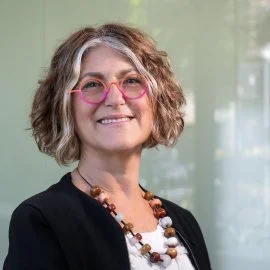
The Gateway to Getting Better: Professor Judith Lacey on Cannabis, Psilocybin and Whole-Person Cancer Care
Interview with Professor Judith Lacey
Read time: 7-8 mins
Professor Judith Lacey has spent more than two decades at the intersection of palliative care, integrative oncology, and cancer symptom management. She brings together evidence-based complementary therapies, exercise, lifestyle medicine, and conventional treatment to care for the whole person, from diagnosis through to survivorship and advanced cancer.
Over the past decade, Judith has become one of Australia's most respected voices in medicinal cannabis research and prescription, contributing to landmark studies in brain cancer and endocannabinoid function. Her approach is rigorous, conservative, and deeply patient-centred.
In this conversation, she shares her insights on cannabis in cancer care, its relationship with immunotherapy, the emerging data on endocannabinoids and exercise, and the promise of psilocybin-assisted therapy for those living with life-limiting illness.
Adam Isaac Miller
Can you orient our readers with your background and core focus in cannabinoid therapy?
Professor Judith Lacey
I run the Integrative Oncology and Supportive Care Service in a big comprehensive cancer centre. I'm on the board of the Society for Integrative Oncology, which is a global group that includes cannabis prescribing and psychedelics and everything that supports people to live fully, which is not always completely mainstream.
The other area I'm very involved in is an organisation called the Multinational Association of Supportive Cancer Care. And so all of that is how you support people to live well and thrive with a cancer diagnosis, from diagnosis on into survivorship.
My specialty is keeping people's symptoms under control. How do you improve people's wellness and wellbeing? How do you keep people actually thriving with cancer? And so integrative oncology is about empowering people to be active participants in their own care. It's about using evidence-based and evidence-informed natural products and lifestyle change alongside of conventional cancer care.
So, how do I incorporate cannabis? I use cannabis as part of that toolbox of what we provide. So, gut microbiome, acupuncture, yoga, meditation, exercise, conventional drugs if needed, selected herbs and supplements.
When it comes to the use of herbs and supplements and medicinal cannabis, I prescribe quite a bit - if it's the right indication for the right person at the right time. I see people who have any form of cancer, so people from right across the spectrum of different cancers, supporting them with all sorts of tools from diagnosis through to the end of life.
Adam Isaac Miller
You mentioned the type of cannabis for the right patient, right time. How do you determine what cannabis product will be effective for a patient?
Professor Judith Lacey
Cannabis isn't for everyone. We use patient-reported outcome measures, where people score their symptoms and main concerns, which inform me of their symptom clusters. Based on that, we predict their symptoms for their particular treatment, whether they are driving, and their lifestyle. Then I'll determine the approach.
For example, somebody having chemotherapy that will induce nausea. We know from the trials, including trials that happened to be done in my hospital (so I know the details) that THC-CBD. So that would be my preference, usually prescribed as an oil the day before. I've got different protocols for different people. For my 86-year-old patient, I'd prescribe a very low THC product for their pain; for the 17-year-old with nausea, I'd probably use a higher THC product if they've used those before.
Adam Isaac Miller
I’ve noted studies in the past showing THC's ability to encourage cancer cells to commit apoptosis. Why hasn't there been a major discovery yet using cannabis to address cancer head-on?
Professor Judith Lacey
Recently, Janet Schloss, Justin Sinclair and I published a robust, well-controlled study of 91 people with recurrent high-grade brain cancers, looking at the tolerability and quality of life benefits of cannabis using two different ratios of THC and CBD. We showed that it improved people's sleep and quality of life. The challenge is designing a study with limited funding to demonstrate anti-cancer benefits in humans.
There's a signal there, from our studies and from others in Spain whose research has been taken over by GW Pharma. That study is still continuing with a THC-CBD preparation; we are waiting for those results. There is some research suggesting that it may have an anti-cancer benefit. But you can't say cannabis has an anti-cancer benefit until you do really good, robust studies. You can say there's a signal, and ask: Is it safe? Does it have other benefits?
Showing the benefit for quality of life means that we can prescribe it for people with those cancers.
Adam Isaac Miller
We recently shared an article on the Insiders Extract Newsletter with a Doctor looking at issues with medical cannabis and cancer immunotherapy. In short, his data suggest that cannabis may not actually be complementary to cancer immunotherapy. Have you seen, or do you have any materials or insights on such an approach?
Professor Judith Lacey
It's a great question. When we talk about immunotherapy, first of all its important to note that immunotherapy and chemotherapy are completely different. Chemotherapy is killing off your cells; it's immunosuppressive. I'm simplifying this hugely.
Immunotherapy stimulates your immune system to attack the cancer. A study published in JAMA showed that people using large doses of cannabis while on immunotherapy had a poorer response, though it didn't alter total survival. Progression-free survival may have been compromised. That was an observational study, not a randomised controlled trial, but it raised the question of whether cannabis, with its profound anti-inflammatory effect, may reduce the efficacy of some immunotherapy, much like steroids can.
That study was a few years ago. More work is being done, and I think cannabis may actually complement immunotherapy, but we're waiting to see those results, whether it's actually advantageous or not.
I'm doing a lot of research and work in the gut microbiome. Research is being conducted on the potential benefits of oral cannabis for the gut microbiome and on its synergistic effects on it. A healthier, more diverse gut microbiome is linked to better immunotherapy response in some cancers, and you also may get better symptom management and fewer side effects. So it's an open-book sort of space.
So I would say low doses, I see a lot of people on immunotherapy and use low-dose cannabis for joint pain to keep people on treatment. Oncologists are comfortable with low doses, but the studies cited used high doses. So we don't know.
Adam Isaac Miller
Yeah, so it's the jury's still out, it seems. It's safety.
Professor Judith Lacey
You don't want to give somebody something that is going to impact negatively on their response to treatment.
More research needs to be done; as it stands, it's not legal to prescribe cannabis to treat cancer. We're treating the side effects of cancer. Cannabis is a medical product. It should be prescribed medically for symptoms related to cancer, at the moment, until we have evidence.
People are using stuff off-label all the time. whether it's berberine, ashwagandha, or other herbs, hoping for anti-cancer benefits or symptom management. As long as they do no harm, and they're TGA-approved products, that's one thing. But cannabis is registered for very specific purposes.
Adam Isaac Miller
So, with your line of work, I'm sure you've seen many case studies of people trying to change their lifestyle dynamics to address cancer.
I know this has nothing to do with cannabis, but I'd be very curious to know what your thoughts are when removing something completely like sugar. Have you seen any notable effect that piques your interest?
Professor Judith Lacey
You know, there's a lot of I'm an advisor on a website called Cancer Choices. It examines the level of evidence of the use of different products, such as those that block sugar, sugar-free diets, and the Warburg effect.
The question is, are some cancers actually more active when the diet is high in sugar? We don't know. Does it cause harm to reduce sugar in the diet? No. Does blocking sugars harm people? Only if they have other issues. So if you can reduce your sugar intake, some people do intermittent fasting, follow ketogenic diets, or take blockers of the sugar pathways.
So first, I look at the principle of do no harm. Then the discussion turns to the lack of studies. How do you recommend something in this context? I recommend that people do things that empower them to stay well, be engaged in their own health, and may lead to better outcomes.
What I do say about medical cannabis is that I have found it extremely useful for improving people's quality of sleep, their anxiety and for tolerating their treatment and tolerating cancer-related symptoms. Still, with the principle of do no harm, if you get a really good night's sleep, eat better, exercise, and have a cancer driven by obesity, blocking sugars can improve outcomes. And circling back to the first point, a good night's sleep by using cannabis can improve outcomes.
And if we can speak about endocannabinoids and exercise. I’m part of a study that measures endocannabinoid levels in cancer patients alongside matched controls, with measurements at baseline, after rest, and after exercise.
Adam Isaac Miller
How do you measure that? Are you drawing blood?
Professor Judith Lacey
Yes. AG, AEA, SEA, OEA and anandamide, and we were looking at runner's high. It was a small study, only 20 patients, but we found that people with cancer had blunted endocannabinoid levels. The anandamide response was still there; everyone still got that peak with exercise, which supports what we know about the runner's high being driven by the endocannabinoid system. But the overall levels in cancer patients were significantly lower.
So the question becomes: if the endocannabinoid system is blunted by cancer and its treatment, does cannabis play a role in restoring that?
I wanted to see if, if you then supplement people with cannabinoids, would they exercise more? Would they feel better? Would they feel more engaged? We don't know, that's the next stage of the work. Could it help people feel more motivated, more engaged, and more able to exercise? Because we know exercise improves outcomes.
The CHALLENGE study showed that a personalised exercise program improves survival in colorectal cancer. If cannabis helps people get there, that's worth understanding.
We're not saying this small study proves everyone with cancer needs cannabis. We're asking whether cannabis supports a better homeostasis, a better sense of wellbeing, and whether that translates into real outcomes. So that is what is starting to be teased out, but you have to do the science. You need to invest in it and ask the right questions.
Adam Isaac Miller
Wow. What a Pandora's box. That kind of research wouldn't be cheap at all, especially if you're drawing blood!
So you mentioned psychedelics, and you mentioned psilocybin specifically, and I'm curious to know what your area of inquiry is there? There's some fantastic work being done.
Professor Judith Lacey
Margaret Ross's study was recently published, which is about improving depression and anxiety in people approaching the end of life using psilocybin-assisted psychotherapy. We're not talking about microdosing, we’re talking about psilocybin-assisted psychotherapy for existential wellbeing, which isn't anxiety, it isn't quite depression.
We're talking about addressing what's sometimes measured using the demoralisation scale, that feeling of not knowing how to live with uncertainty, of whether to curl up and give up or continue to find meaning and live fully until you die. Psilocybin-assisted psychotherapy, whether one-on-one or in group settings, can improve a person's ability to live with the uncertainty of advanced cancer.
I'm a palliative care specialist by trade. People sometimes see living and dying as very black and white. What psilocybin brings is the understanding that you can live fully, even with a finite time to live.
Adam Isaac Miller
I think one of the central pieces here is around rumination. When a diagnosis makes death feel certain and immediate, people fixate on it in a way most of us never have to. From what I've seen, psychedelic experiences seem to offer a reframing, or differing realisation of their relationship with death, meaning, a personal sense of what lies beyond, and that can meaningfully shift the quality of life. It must be an extraordinary thing to witness.
Professor Judith Lacey
Everyone diagnosed with a treatable but not curable cancer has a risk of dying and should live fully. That's my bread and butter. Keeping people living well, with all the tools and modalities at our disposal.
Adam Isaac Miller
At what point did you choose to invest in cannabis within cancer care? I remember reading about your work in 2016-2017. But was this originally when you started? How did it all come to be?
Professor Judith Lacey
It started around 2015-16 with a chemo-induced nausea and vomiting study at our hospital. The gates opened, and every patient wanted it prescribed. I was asked whether I'd prescribe for those who didn't meet the study criteria, and I said absolutely. That led to involvement with NSW Health and the TGA, helping develop the protocols to get medicinal cannabis approved and out there.
I prescribe drugs, I can prescribe drugs, I prefer prescribing meditation and diet, but as a drug, cannabis is one of the best I can offer cancer patients. It treats multiple symptoms at once. Cancer patients don't just have pain. They have pain, sleep disturbance, anxiety, nausea, and loss of appetite, all occurring together. One product, self-titrated by the patient, can address that whole cluster, reduce polypharmacy, and improve well-being. Patient empowerment is built into the prescription.
I spend an hour with patients before prescribing and follow them regularly, covering cancer treatment, bloods, exercise, and diet at every visit. I see medical cannabis as a gateway drug for getting better.
Adam Isaac Miller
You've mentioned meditation a few times. Two questions. One, do you meditate, and two, is there a particular meditation practice or modality that you recommend to patients when they engage?
Professor Judith Lacey
Do I meditate? I'm not very good at discipline, self-discipline, but I recommend it to everyone else. I practice yoga and meditation regularly. So I have a practice that keeps me calm and keeps me centred, that's me.
We just ran a course on MBSR, Mindfulness-Based Stress Reduction, which was for people living with stable, treatable, but not curable cancer. So that’s a big group of people who are working, but they're living with treatment. I think what you can do is you give people skills to reduce their stress, and is it meditation? Cannabis isn't enough. But perhaps CBD, if it helps take your stress down so you can meditate, exercise, and do yoga, yoga nidra, can add some benefit.
Adam Isaac Miller
We've covered many things. Tell me, is there any final message regarding your work, your passions or your interests you’d like to leave with?
Professor Judith Lacey
Look, I think what cancer care needs is care for the whole person and not just treating the disease. And I think that what medicinal cannabis prescribing needs is caring for the whole person and not just writing a script. What we need to focus on is how to meet a person to spend, as doctors, not to be the two or the 12-second script writer, the 45-second script writer, whatever it is, but to be the person that actually meets somebody. They come to you for a reason. There's some level of distress for people who really see that maybe medicinal cannabis is right for them. Incorporate that as part of a whole-person care program to empower people to actually change their lifestyles, live well, live fully, and manage their symptoms effectively. And I think there is so much we can benefit from this plant. There are so many benefits that we can get from the therapeutic connection of a practitioner and a person. Whether they're prescribing cannabis or not, but that therapeutic connection, if that gets lost, then we're not providing care, and we should take the word medicinal out of cannabis. So that's the message that I would say. So I would say, I hope that the message is that it plays a crucial role. It's a fantastic product to prescribe. It can benefit people in so many ways, but we are running a risk in Australia of ruining that.
Adam Isaac Miller
I appreciate you sharing that. There is a feeling of “don't mess it up” in the cannabis space.
Professor Judith Lacey
If I say it's one of the best drugs I've ever prescribed in cancer care, I've been working in cancer care for over 25 years. That's a big thing to say. If it's improving somebody's quality of life, and not just with cancer, people with chronic disease, chronic pain, that's what it is for. It is to improve people's quality of life so that they live more fully.
Adam Isaac Miller
That's a great way to finish. I appreciate you sharing.
Judith is a supportive care and integrative oncology specialist working in supportive cancer care and cancer-related symptom management. With a background of over 20 years as a palliative and supportive care specialist, she has dedicated the last decade to developments in this field, integrating holistic medical and nursing supportive care with evidence-based complementary therapies, exercise and lifestyle changes alongside conventional treatments to care for the whole person. She leads a specialist multidisciplinary team of practitioners and allied health professionals with outpatient clinics in the LivingRoom at Chris O’Brien Lifehouse. Judith’s passion is caring for patients with a history of cancer who could benefit from an integrated and proactive symptom management that provides exceptional support from diagnosis, during and after cancer treatment. Judith consults with patients who are open to finding ways to thrive and live well with cancer and beyond: from diagnosis through to survivorship, and with advanced cancer. She can discuss safe use of herbs, supplements, diet and prescribes medicinal cannabis when appropriate.
Disclaimer: This information is shared with a global readership for educational purposes only and does not constitute medical or business advice. All patient-related information has been de-identified OR fictional to protect privacy. Nothing in this article is intended to promote the use or supply of medical cannabis to members of the public.